

The Effects of Municipal Pollution
Menu
A City Without Waste
Cities draw people because of the social, economic, and quality of life opportunities they provide for their residents.
Cities are overconsumptive, and high consumption cities generate more garbage per person than low consumption cities. A 100 percent recycling rate and the recovery of all resources from waste materials are part of the idea of the city without waste.
More waste is produced globally than any other environmental contaminant, thus addressing this issue can have a far quicker and more significant impact on the fight against climate change. For instance, the tonnes of food waste dumped in landfills each year degrade into methane, a gas that is 25% more potent than CO2 and contributes to current global warming. World solid waste and material management system transformation might significantly cut global emissions.
Municipalities in urban areas around the world are hastening the transition to a future in which there is no waste. In order to make our cities' urban centers cleaner, healthier, more resilient, and inclusive, municipalities have pledged to take bold, quantifiable, and inclusive initiatives to reduce municipal solid waste creation and enhance materials management in their cities. For social entrepreneurs and vulnerable areas, improved waste management can also generate employment and economic prospects.
The city without waste strategy is an ongoing endeavor to eliminate waste by developing systems that do not produce waste in the first place rather than burning or landfilling it.

The future of a city without waste
There will be many changes in several areas to achieve the objective of a city without waste. Urban farming will reintroduce food production into urban areas, building efficiency will increase, and public transportation will take precedence over private automobiles in the future. Private vehicles will be viewed as a waste of space in cities, and public spaces will be improved to make cycling and walking more enjoyable and secure. Most cities need to make considerable improvements to their public spaces in order to enhance urban waterfronts and the space between buildings and provide improved chances for social interaction among people of all ages.
As we establish new communities in the future, we will also be retrofitting the infrastructure, building materials, and current ones. Architecture and design will focus more on resource-efficient retrofitting, urban redevelopment, and adaptive reuse of existing buildings and neighborhoods rather than creating brand-new structures. Old commercial centers are already being transformed into high-density, mixed-use projects.
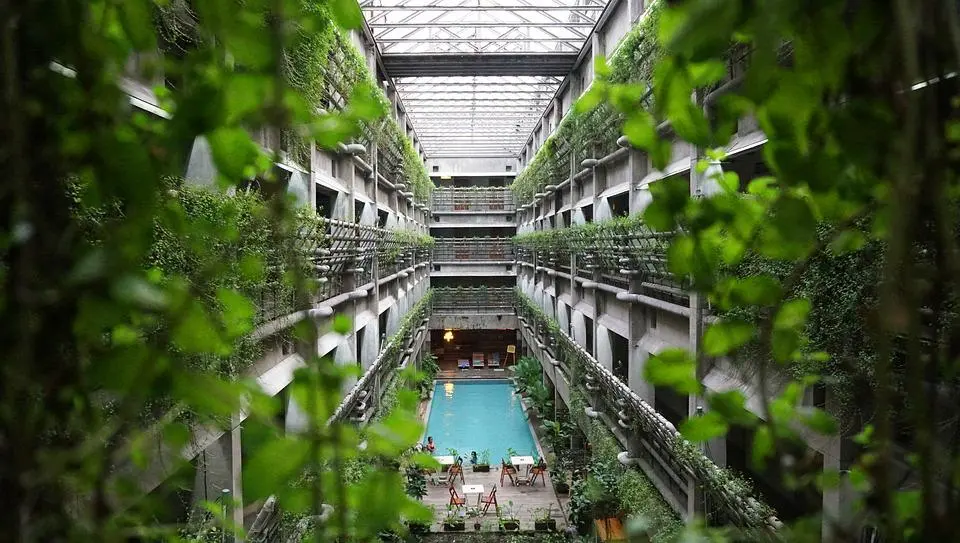
The goal is to create environmentally friendly designs that are inspired by nature, where waste is viewed as a resource and organic waste is used as fertilizer, where new construction materials are made from recycled materials, and where the potential for renewable energy is fully realized by utilizing biomass, wind, solar and biomass resources to nourish renewable energy into a smart grid. We will alter the way we produce energy and observe an increase in decentralized systems on rooftops and facades, where cities transform into power plants, and where all residents can produce energy rather than just consuming it.
The way society handles waste has already undergone significant change, and both waste production and recycling rates have been steadily rising. But for the recycling economy of the twenty-first century to become a reality, awareness-raising and behavior-changing programs are required. In the same way that legislation is required to force product manufacturers and construction firms to operate in a more resource-efficient and waste-free manner, consumers need to be made aware of the value of waste, such as the value of food waste, e-waste, glass, and packaging cardboard.
We must acknowledge that, as world citizens, we inhabit a planet with limited resources. Therefore, for the planet to remain sustainable, efficient resource use and resource recovery from waste are essential. A city can be really sustainable if it can produce its own food, use water from its own sources, generate its own energy, create jobs and other economic activity, govern the system effectively, and finally recover all of its resources from waste streams.
 English
  Ελληνικά
  Português
  Română
  Español
  Hrvatski